

NEWS CENTER
—
NEWS CENTER
—
Key design concepts for the construction of new audio-visual systems in sports venues
2023-08-12 17:39:49
Click:
“
It is not accidental that the videos in today's sports venues and arenas are con
”
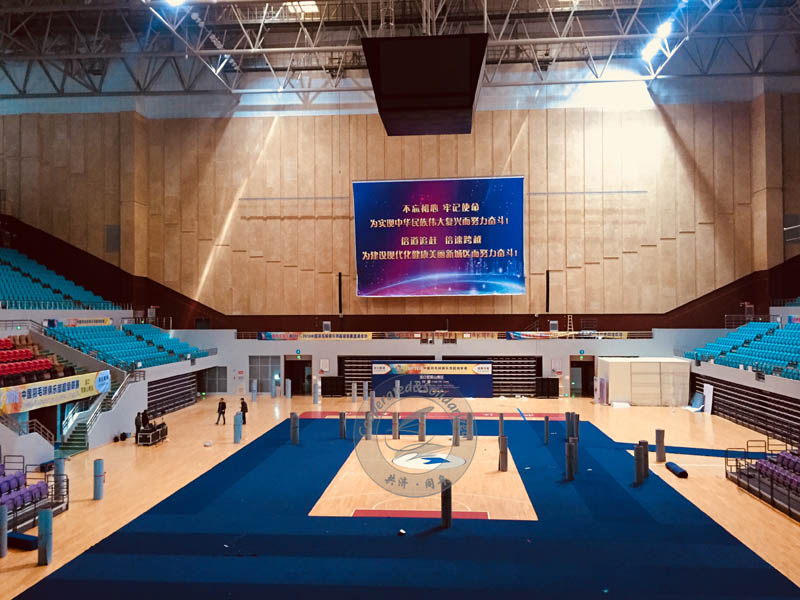
It is not accidental that the videos in today's sports venues and arenas are constantly upgrading. In the past few years, the size of many display screens in sports venues and arenas across the country has been increasing. It's like some of the most famous stadiums are competing with each other, becoming places with the largest video screens.
However, to enhance the experience of various event participants with large screens and huge signage, you don't need to have one of the largest venues or the largest video screen. Please remember that participants are not the only factor to consider today. You don't have to have as much budget as large venues. Smaller venues can also achieve high-quality, versatile, and futuristic workflows. The numerous products currently on the market will greatly increase production value, simplify distribution, and help the venue face the future, and these products are now more affordable than ever before.
Ensuring that stadiums and arenas generate engaging content that attendees and spectators want is easier and more important than ever before. Those responsible for AV in sports venues and arenas should consider improving or upgrading the technology in their systems.
Camera angle: Various shooting angles provide attendees with different perspectives, not just the field of view they can see from their seats. Cameras in today's market can be placed in inconspicuous positions to avoid interfering with movements near seats or in front of the camera, even if they can capture exciting content for people sitting far away. Essentially, the camera provides a front row experience for people in the back row. Some cameras can even be operated remotely, which means the venue does not need to be equipped with a photographer at each shooting point. This not only saves money and resources, but also makes it easier than ever to provide more shooting angles.
Image quality: Professional venues should bear in mind that image quality and overall viewing experience are equally important as the content itself. High quality images will immerse the audience more in the event, performance, or activity; Moreover, they can affect people's experience and impression of the entire venue. Viewers want to see content that looks as good as the experience they have had watching at home or on their mobile device. Today's technology can provide affordable high-resolution videos, so there is no reason for viewers to experience poor viewing experiences on-site.
Scalability: Sports venues and arenas can be used as multifunctional venues, not only for large-scale sports events, but also for concerts, ceremonies, and other on-site activities. Multifunctional video settings are crucial. Each activity has different screen and signage requirements. Therefore, video settings can be zoomed in or out to fit every activity requirement from SD, HD to 4K, 6K, 8K, or even 12K, which can save money and keep operations smoother.
• Streaming playback: Finally, gyms and arenas should strive to provide an excellent viewing experience for those who cannot participate in person. Nowadays, transmission and loss are more important than ever before. Live streaming cannot provide the same experience as the actual person present, but it can combine multiple shooting angles, high-quality images, and scalability to create a video stream that is as close to the real event as possible. Provide high-quality services to the audience,
Author:
Guangzhou CMX AUDIO Co., Ltd









Related news

No data
 Service
 Serice
 Service
 Email
Email